Foraging spot
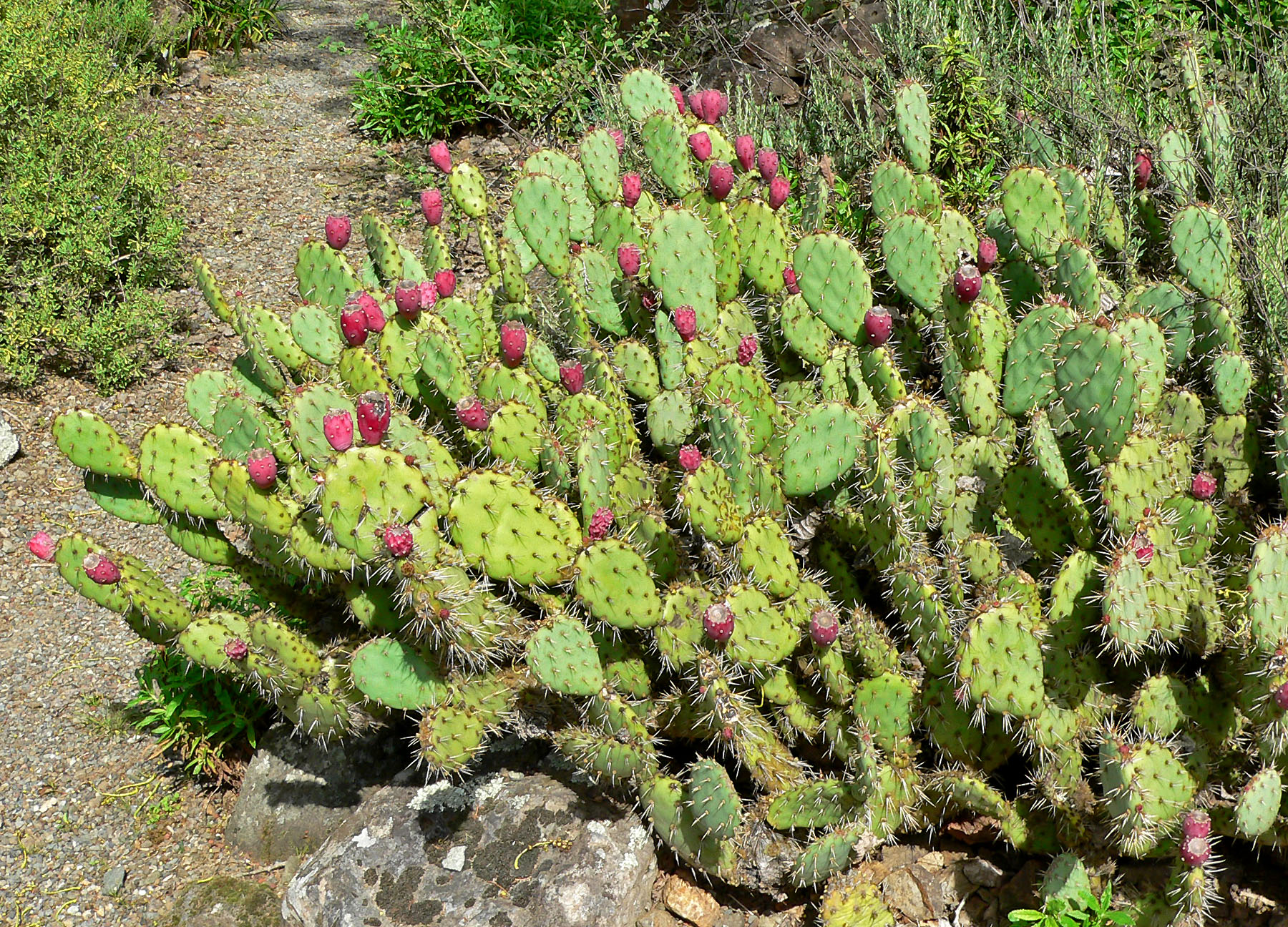
Prickly pear tree
Tunas (fruit) late summer; nopales (pads) in spring. Mind the glochids.
Coordinates: 37.870228, -122.276070
Walk here → More about Prickly pear
What to do with it
- Peel the tuna; eat the fruit chilled
- Blend the juice into agua fresca
- Grill the pads (nopales) as a veg
Ways to keep it
- Prickly-pear jelly or syrup
- Lacto pads or fruit soda (ferment)
- Freeze the juice
About Prickly pear
Opuntia, commonly called the prickly pear cactus, is a genus of flowering plants in the cactus family Cactaceae, many known for their flavorful fruit and showy flowers. Between 8,000 and 9,000 years ago, the Opuntia prickly pear cactus was domesticated in central Mexico. Cacti are native to the Americas, and are well adapted to arid climates; however, they are still vulnerable to alterations in precipitation and temperature driven by climate change. The plant has been introduced to Australia, southern Europe, the Middle East, and parts of Africa. Prickly pear alone is also used to refer to the fruit, but may also be used for the plant itself; in addition, other names given to the plant and its specific parts include tuna (fruit), sabra, sabbar, nopal (pads, plural nopales, from the Nahuatl word nōpalli), nostle (fruit) from the Nahuatl word nōchtli, and paddle cactus. The genus is named for the Ancient Greek city of Opus. The fruit and stems are edible. The most common culinary species is the "Barbary fig" (Opuntia ficus-indica). In places where they have been introduced outside their native range, some species in the genus Opuntia behave as aggressive invasive species.
From Wikipedia.
Tree and plant locations come from Falling Fruit, a volunteer-run map of the urban harvest, used under CC BY-NC-SA 4.0. This project is non-commercial. Locations are crowd-sourced and provided as-is — always confirm a plant's identity and that you're welcome to pick before foraging.
Photos and descriptions from Wikipedia / Wikimedia Commons. Maps © OpenStreetMap contributors. Not affiliated with Falling Fruit, Wikimedia, or OpenStreetMap.