Foraging spot
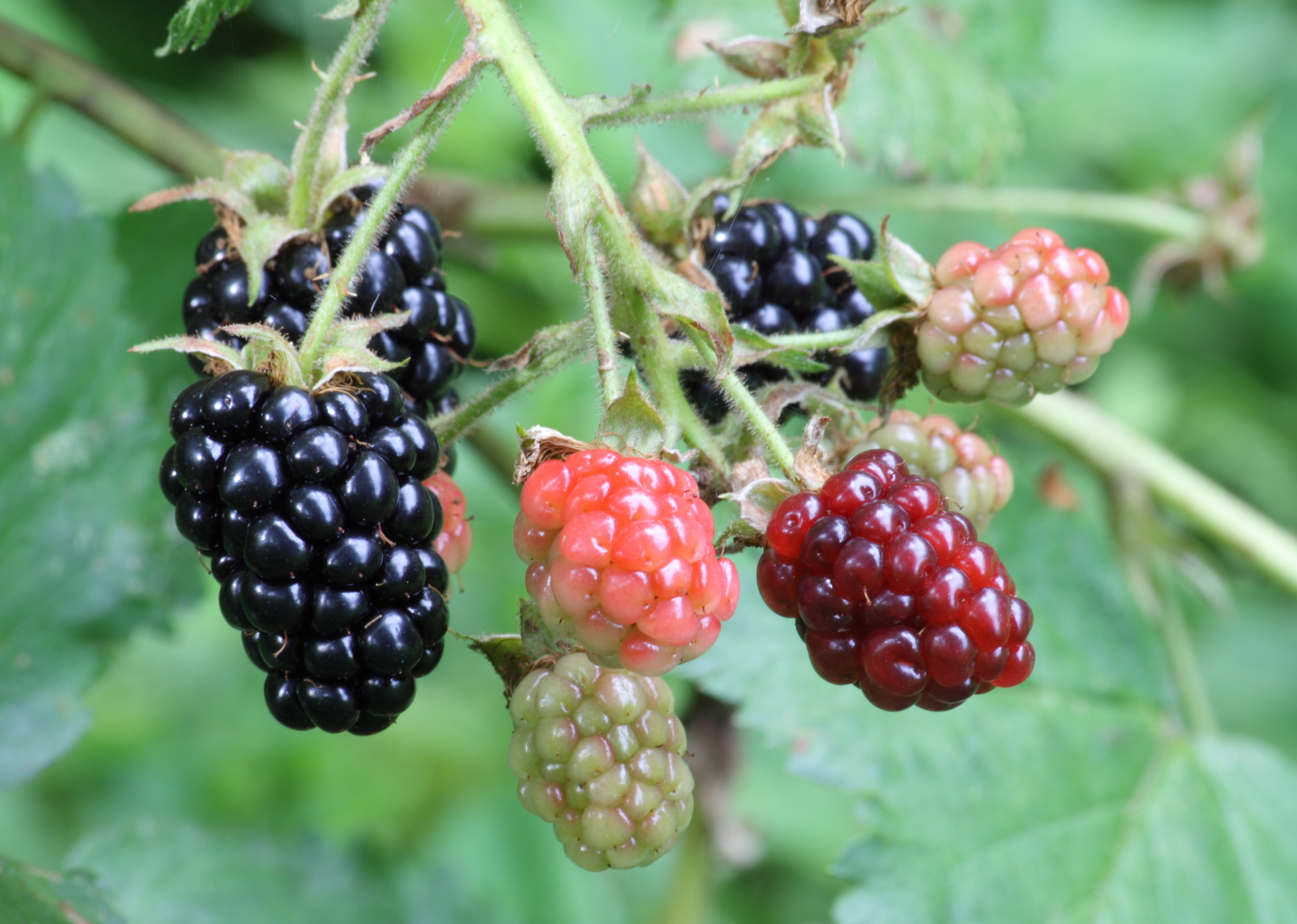
Blackberry tree
Himalayan blackberry is everywhere — creeks, fences, lots.
Coordinates: 37.867538, -122.292709
Walk here → More about Blackberry
What to do with it
- Eat fresh and warm
- Bake into cobbler or pie
- Cook into jam or syrup
Ways to keep it
- Blackberry jam
- Wild soda or wine (ferment)
- Blackberry shrub (vinegar)
- Freeze whole
About Blackberry
A blackberry is an edible fruit produced by many species in the genus Rubus in the family Rosaceae, hybrids among these species within the subgenus Rubus, and hybrids between the subgenera Rubus and Idaeobatus. The taxonomy of blackberries has historically been confused because of hybridization and apomixis so that species have often been grouped together and called species aggregates. Blackberry fruit production is abundant with annual volumes of 20,000 pounds (9,100 kg) per 1 acre (0.40 ha) possible, making this plant commercially attractive. Rubus armeniacus (Himalayan or Armenian blackberry) is considered a noxious weed and invasive species in many regions of the Pacific Northwest of Canada and the United States, where it grows out of control in urban and suburban parks and woodlands.
From Wikipedia.
Tree and plant locations come from Falling Fruit, a volunteer-run map of the urban harvest, used under CC BY-NC-SA 4.0. This project is non-commercial. Locations are crowd-sourced and provided as-is — always confirm a plant's identity and that you're welcome to pick before foraging.
Photos and descriptions from Wikipedia / Wikimedia Commons. Maps © OpenStreetMap contributors. Not affiliated with Falling Fruit, Wikimedia, or OpenStreetMap.