fruit
Foraging Rose
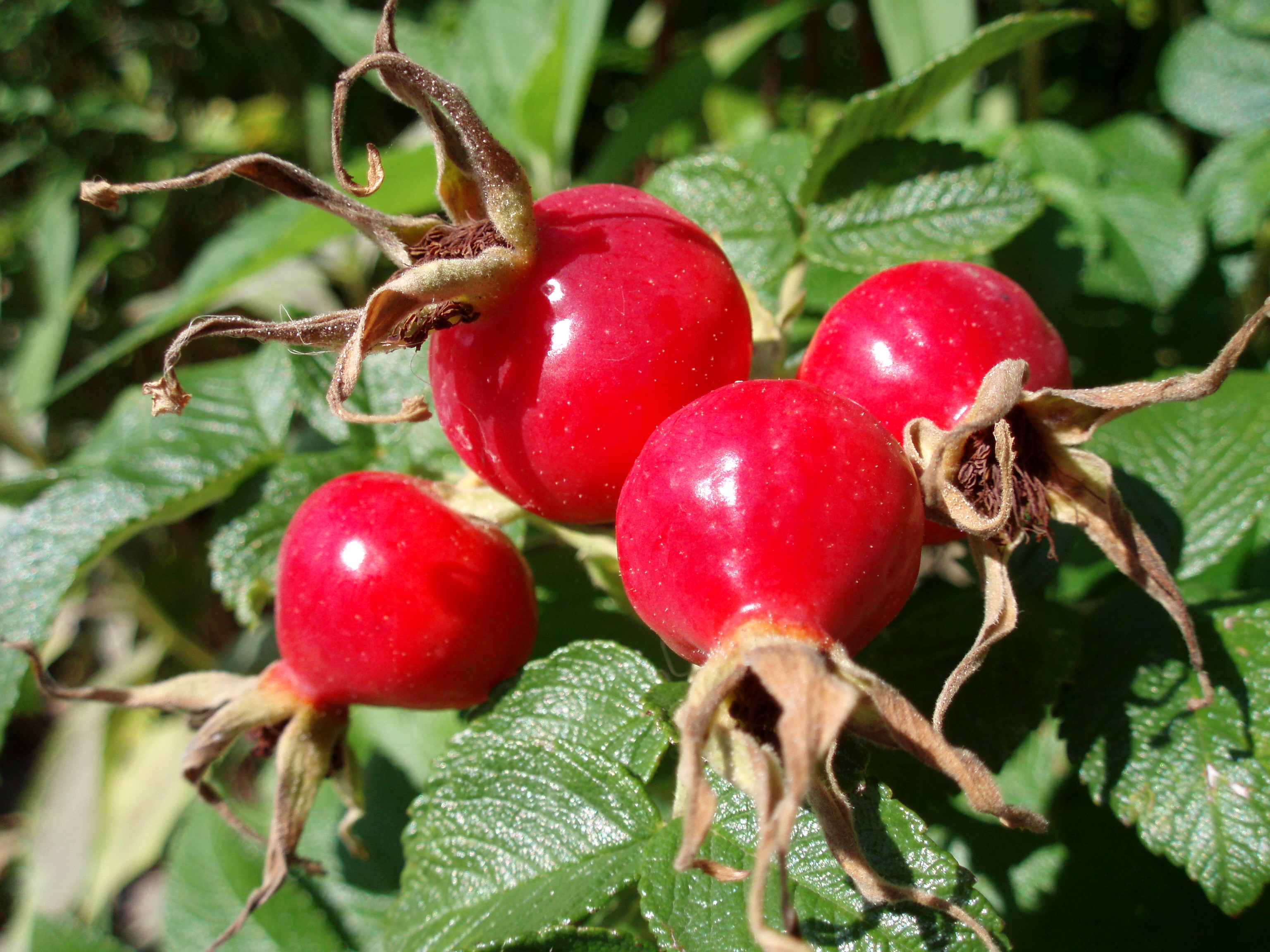
Rosehips ripen red in fall (sweeter after frost); fragrant petals in late spring. Strip the irritating seeds/hairs from hips.
What to do with it
- Deseed the hips, eat raw or in tea
- Toss fresh petals into salad
- Rosehip puree for sauces
Ways to keep it
- Rosehip jam or syrup
- Rose petal vinegar or honey
- Dry the hips for tea
- Dry the petals
About Rose
A rose is either a woody perennial flowering plant of the genus Rosa (), in the family Rosaceae (), or the flower it bears. There are over three hundred species and tens of thousands of cultivars. The plants range in size and form, from trailing and erect shrubs to climbers up to 7 metres (23 ft) in height. Sharp prickles appear on the stems of many species. Their flowers vary in size and shape and are usually large and showy, in colours ranging from white through pinks, reds, oranges and yellows. Most species are native to Asia, with smaller numbers native to Europe, North America, and Northwest Africa. Species, cultivars and hybrids are all widely grown for their beauty and often are fragrant. Different species hybridize easily, and this has been used in the development of the wide range of garden roses. Roses have acquired cultural significance in many societies.
From Wikipedia.
Tree and plant locations come from Falling Fruit, a volunteer-run map of the urban harvest, used under CC BY-NC-SA 4.0. This project is non-commercial. Locations are crowd-sourced and provided as-is — always confirm a plant's identity and that you're welcome to pick before foraging.
Photos and descriptions from Wikipedia / Wikimedia Commons. Maps © OpenStreetMap contributors. Not affiliated with Falling Fruit, Wikimedia, or OpenStreetMap.