fruit
Foraging Date palm
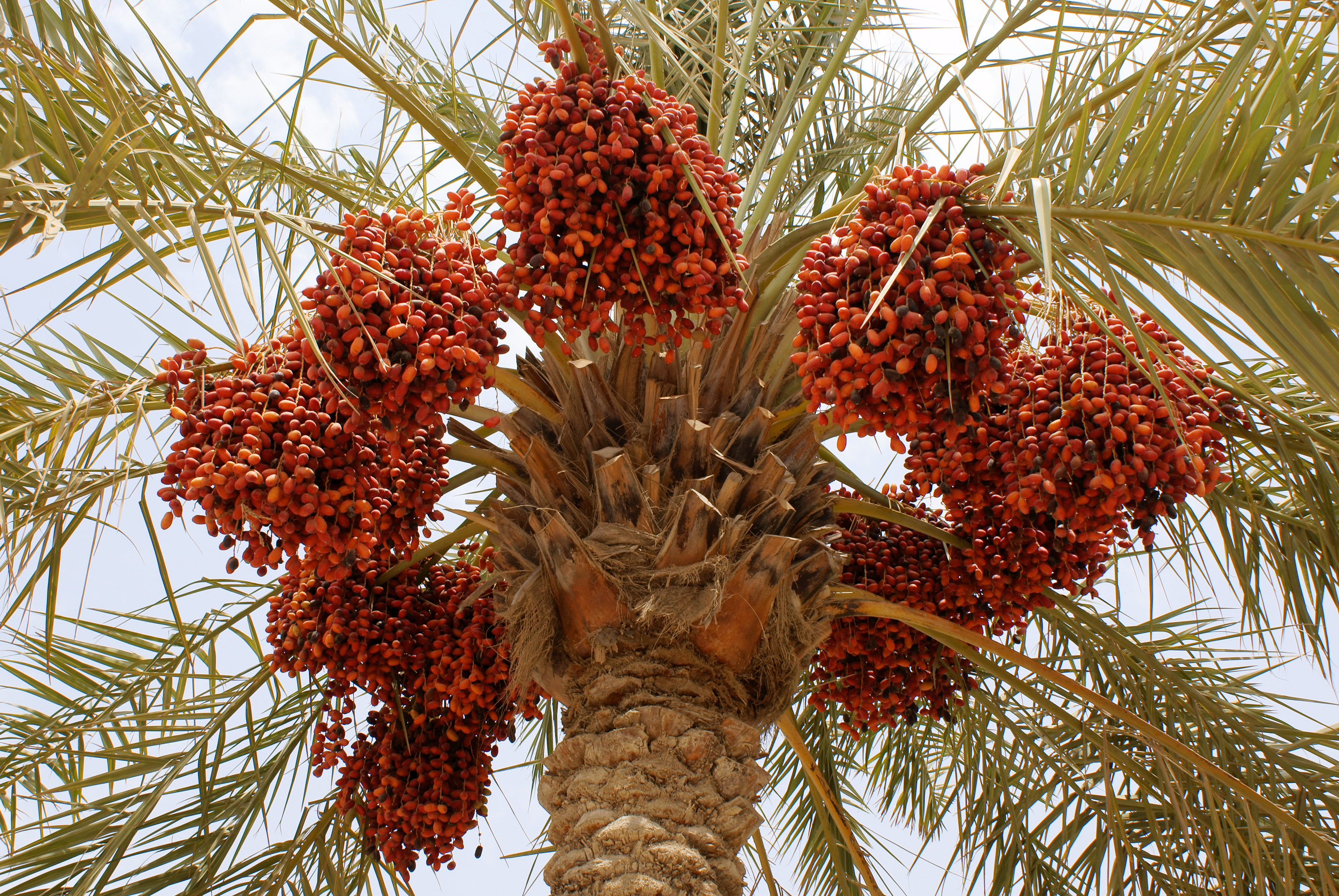
Tall feather palm. Dates ripen amber to brown in fall; many ornamental palms fruit lightly.
What to do with it
- Eat ripe dates fresh or dried
- Chop into baking
- Blend into date paste
Ways to keep it
- Dry the dates
- Date syrup
- Date paste (freezes well)
- Date wine (ferment)
About Date palm
Phoenix is a genus of 14 species of palms, native to an area starting from the Canary Islands in the west, across northern and central Africa, to the extreme southeast of Europe (Crete), and continuing throughout southern Asia, from Anatolia east to southern China and Malaysia. The diverse habitats they occupy include swamps, deserts, and mangrove sea coasts. Most Phoenix species originate in semi-arid regions, but usually occur near high groundwater levels, rivers, or springs. The genus is unusual among members of subfamily Coryphoideae in having pinnate, rather than palmate leaves; tribe Caryoteae also have pinnate or bipinnate leaves. The palms were more numerous and widespread in the past than they are at present. Some Phoenix palms have become naturalised in other parts of the world; in particular, the date palm's long history of cultivation means that escaped plants in the past have long-since become ingrained into the native ecosystems of countries far from its original range in the Middle East.
From Wikipedia.
Tree and plant locations come from Falling Fruit, a volunteer-run map of the urban harvest, used under CC BY-NC-SA 4.0. This project is non-commercial. Locations are crowd-sourced and provided as-is — always confirm a plant's identity and that you're welcome to pick before foraging.
Photos and descriptions from Wikipedia / Wikimedia Commons. Maps © OpenStreetMap contributors. Not affiliated with Falling Fruit, Wikimedia, or OpenStreetMap.